1920s Recording Studios & The July 1923 Lackawanna Trail
How early condenser microphones captured heavy-gauge banjo strings—and behind the lens of Ralph Colicchio’s July 1923 Model T expedition to the Delaware Water Gap.
Early Electric Guitar Pioneer & Studio Gear
Ralph Colicchio’s career spanned the greatest technological transformation in audio history: the leap from pre-1925 acoustic recording horns (limited to 350 Hz–3,000 Hz) to Western Electric’s 1925 electrical condenser microphones (such as the WE 47A/394 capsule) and early 1930s amplified instruments.
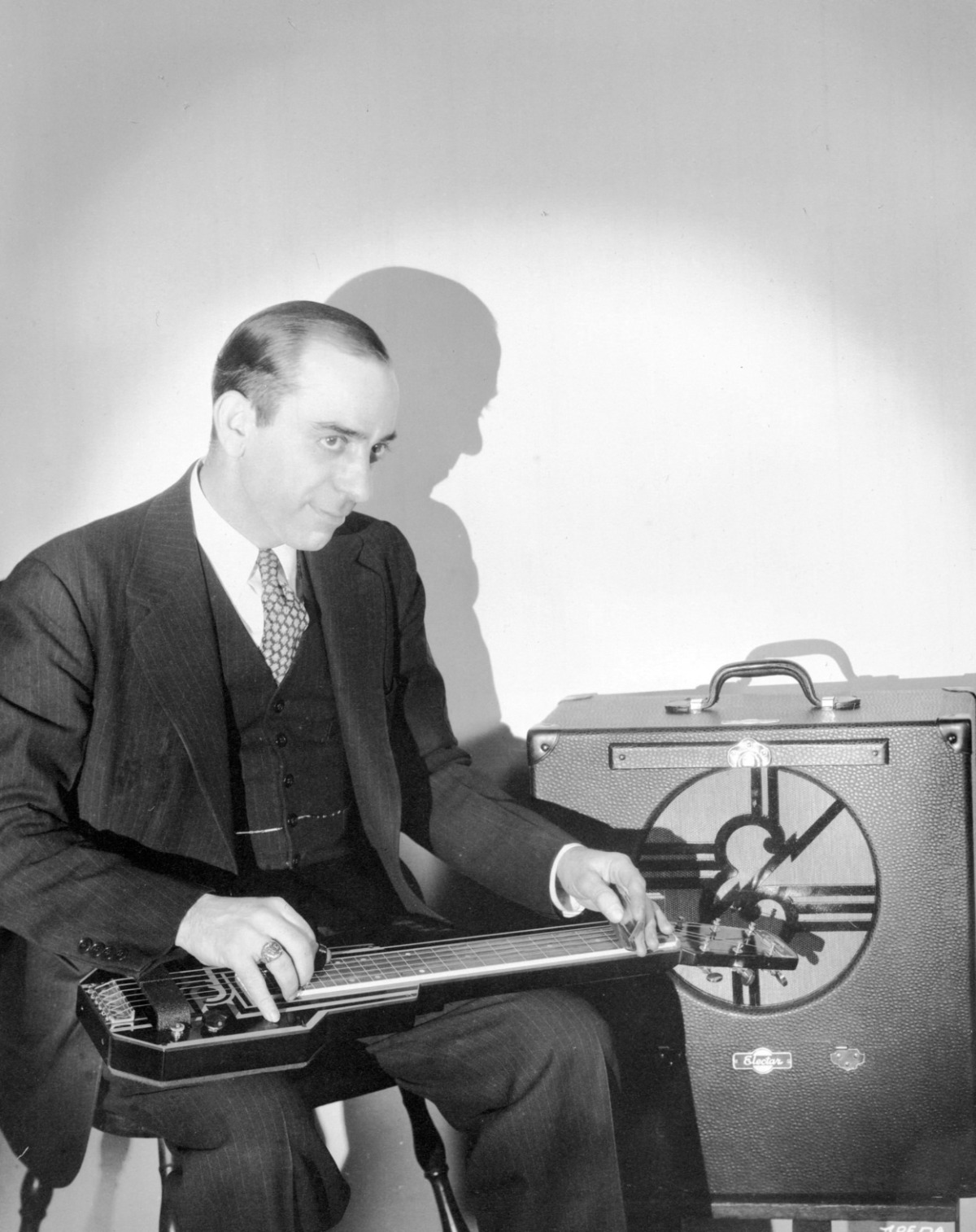
In this rare 1930s studio photograph, Colicchio plays a solid-body electric lap steel (Hawaiian) guitar flat across his knees with a metal tone bar, paired with an early 1930s tube combo amplifier. Alongside his custom tenor banjos and archtop guitars, he arranged and recorded extensively for the Hawaiian guitar craze of the late 1920s and 1930s.
Inside RCA Victor’s Trinity Church Studio (Camden, NJ)
During the 1920s and early 1930s, Colicchio regularly traveled from Bay Ridge, Brooklyn, to Camden, New Jersey—crossing via the Philadelphia ferry or, after July 1926, the newly opened Benjamin Franklin Bridge—to record at RCA Victor’s Trinity Church Studio (114 North 5th Street). Purchased in 1918 to escape waterfront factory noise, the converted 1870 brick church was one of the world’s premier acoustic laboratories:
Gravity-Powered Bell Tower Lathe
Before electrical turntable motors in 1925, engineers hung massive iron clockwork weights inside the church’s hollow bell tower. Hand-cranked to the top of the steeple before each take, their steady gravity-driven descent turned the cables and gears spinning the master wax discs at flawless speed.
Studio No. 2 & Geometric Mixing
Because multi-track mixing consoles did not exist, engineers balanced Colicchio’s powerful banjo against vocalists like The Balladeers using room geometry—seating him 8 to 12 feet back on an elevated wooden riser, slightly off-axis to the Western Electric microphone, backed by burlap-wrapped hair-felt acoustic panels.
Shift to Manhattan’s Great Halls
When Camden subway construction vibrations forced Trinity Church Studio to close in 1935, Victor and Columbia consolidated premier sessions in Manhattan venues like Liederkranz Hall (111 East 58th St.) and RCA’s New York studios, where Colicchio tracked the 1937 Stephen Foster Album.
July 1923: Behind the Lens on the Lackawanna Trail
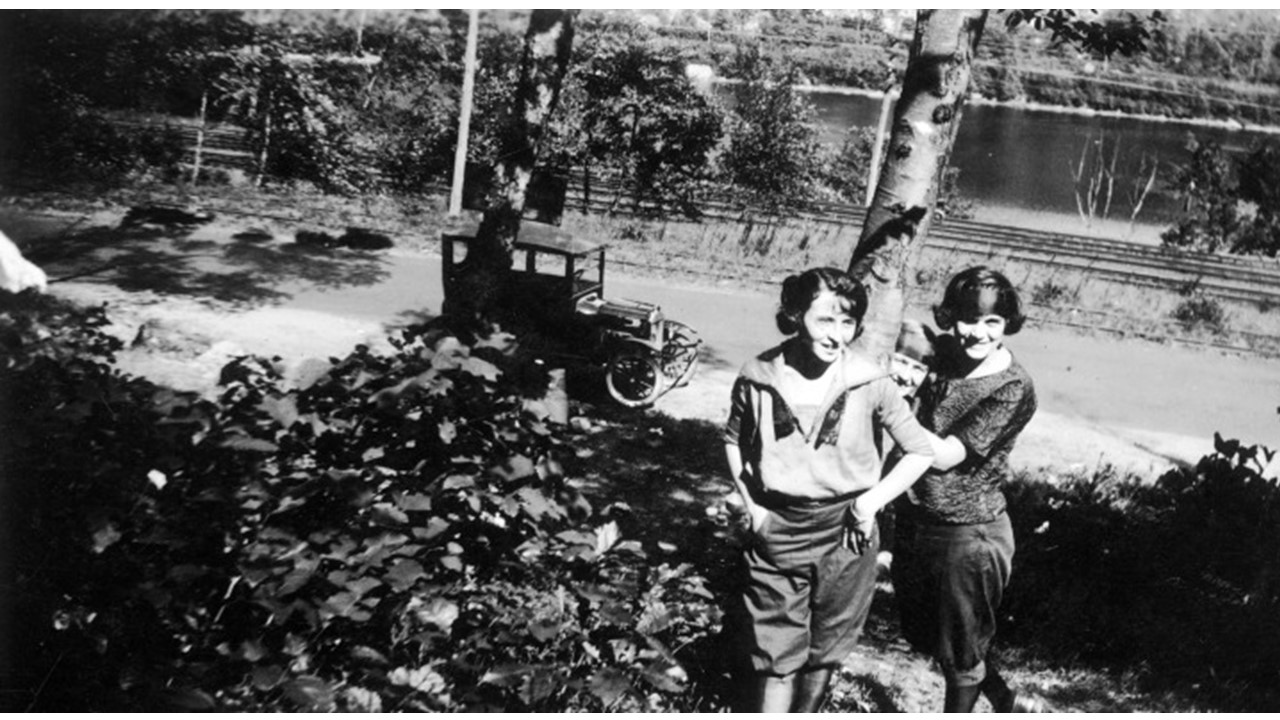
Beyond his mastery of strings, Ralph Colicchio possessed a keen photographer’s eye. In July 1923, four years before the Holland Tunnel opened and eight years before the George Washington Bridge, Colicchio packed his family into their 1923 Model T for a 5-to-6-hour, two-state motoring adventure from Bay Ridge, Brooklyn, to the Delaware Water Gap in Portland, Pennsylvania:
- The Route & Tolls ($5.25 Total Weekend Cost): Driving north up Fourth Avenue across the free Manhattan Bridge to Canal Street, they boarded a Hudson River steam ferry ($0.50 each way) to Jersey City, navigated New Jersey’s early state roads past Morristown and Hackettstown (stopping at early pagoda- and temple-styled filling stations for free radiator water and fold-out Gulf maps), and rumbled across the narrow, single-lane 775-foot wooden Portland–Columbia Covered Bridge ($0.17 toll) onto the newly paved concrete ribbon of PA Route 2—The Lackawanna Trail (today Route 611).
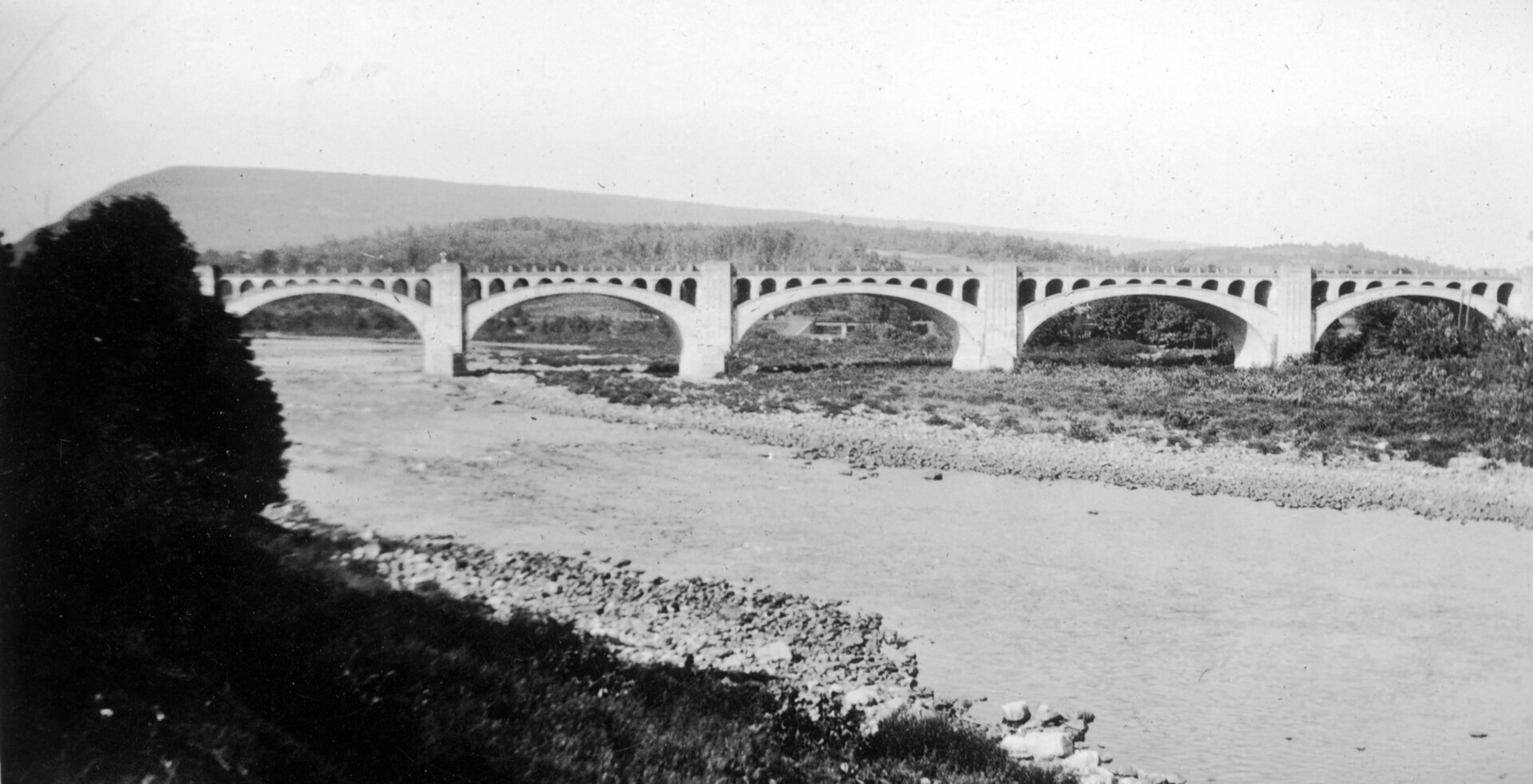
- Capturing the Golden Age of Rail & Highway: Pulling onto the hillside shoulder just north of Portland, Colicchio photographed his family beside their Model T overlooking the bustling four-track Delaware, Lackawanna & Western (DL&W) main line—where crack passenger trains like the Lackawanna Limited flew at 70–80 mph—and the pristine 11-year-old concrete arches of the Delaware River Viaduct (completed in 1912 as part of the Lackawanna Cut-Off).